Spend a week with a product team that has fully embraced AI coding and you'll notice the rhythm has changed. An idea comes up in Monday's standup. By Wednesday someone has a working version running in staging, and by Friday the team is debating whether to put it in front of customers. The distance between "what if we..." and a functioning feature is now measured in days (sometimes hours).
Most of this is good news. But it also exposes a weakness that was always there, hidden behind the cost of engineering. When building took months, the expense alone forced some deliberation before anyone wrote a line of code. Teams built business cases and argued in roadmap reviews, and while clearly some of that was theater, it worked as a filter. Remove the cost and the filter goes with it. What remains is a team capable of shipping something nobody needs in a fraction of the time it used to take.
The odds were never great to begin with. Roughly 95% of new product launches fail to gain traction, and the leading cause is a failure to deliver sufficient value to the people the product was built for. AI, at best, leaves that ratio intact while multiplying the number of swings a team can take in a year. This means more misses, arriving faster … resulting in feature bloat and design entropy.
If your team has picked up extra capacity from AI-assisted development, put a portion of it back into evaluative research, and specifically into the early-stage value validation that answers the most important question in product work: if we build it, will they want it? That question anchors Chapter 13 of Product at a Distance, and it carries more weight today than it did when I wrote it.
Where evaluative research fits
In the book I treat research as continuous work that shows up in three modes. Foundational research happens independently of any specific initiative; it's how you learn who your customers are, what their environment looks like, and how they get things done today. It feeds your product strategy. Generative research zooms in on a specific opportunity area or roadmap theme and explores how you might address it, through techniques like card sorts and participatory design.
Evaluative research comes once you have concepts in hand. It spans everything from early value validation down to pixel-level usability testing, and its job is to corral the three big risks of any new product: desirability (will customers value it), viability (will it move the business), and feasibility (can we build it). This article stays mostly with desirability, because AI does the least to help you answer it and teams skip it most often.
Why you can't just ask
The obvious way to validate a concept is to show someone a prototype and ask whether they'd use it. This approach is close to useless. People are generally too polite to tell you the truth, and even the blunt ones struggle to answer honestly because they can't see the full cost of switching. Those costs pile up in places customers rarely mention: the license fee, the retraining, the data trapped in the old system, the colleague who built the current spreadsheet and will take its replacement personally. Our own optimism bias compounds the problem. Peter Thiel's argument that a new product needs to be ten times better than the next-best alternative comes from this gap, and a polite "yeah, I'd probably use that" tells you nothing about whether you've cleared that bar.
Experimentation offers a more scientific path, and AI has made experiments almost free. You can generate three landing page variants and a fake-door test before lunch. For incremental changes this works well. For a meaningful innovation, a well-built experiment can tell you which idea drew more interest and leave you guessing about the reason, and without that reason you might pick the right direction and still have nothing to guide the next round of design decisions. Bigger bets call for deeper qualitative inquiry, ending with a request for commitment.
Running a value validation session
The first rule is to forget about buyers. Pricing, messaging, and positioning belong in a separate workstream. Value validation focuses on the people who will actually use the product, and on what they'd get out of something that doesn't exist yet. I schedule these as sixty to ninety-minute sessions; under sixty won't give you enough depth to explore multiple concepts, and past ninety the participant is worn out.
Fidelity deserves some thought. AI tools make it easy to produce a polished, clickable, nearly production-ready prototype, and the temptation is to bring it along. I'd resist. A medium-fidelity concept is realistic enough for participants to engage with seriously and rough enough that they won't spend twenty minutes on button colors. I often prefer flat, non-clickable concepts paired with a rich conversation, which keeps attention on the idea and its relevance to the participant's work. Remember: this is not usability testing.
Open by stating the goals of the session explicitly, then give enough context for the participant to engage, which might mean a quick walk through your current product or the hero flow of a future journey. When you get to the concepts, present as little as you can and step back. I've consistently found that the more a participant explores on their own, the more accurate their feedback on value becomes, and the more likely they are to spot gaps you'd gloss over if you were narrating. Bring a loose set of questions so you don't forget to test a critical hypothesis. The ones I lean on most:
- Who would use this, and why?
- What would you stop doing or using if you had it?
- What would you start doing?
- What might block you from using it in your environment?
- What's missing?
When comparing several concepts, have participants rate or stack-rank them, and pay attention only to the relative scores. A concept that averages nine across participants against one that averages five tells you a lot. A nine on its own tells you very little.
The ask
The close is where value validation earns its keep. By the end of the session the participant understands the concept well and has often started helping to shape it. That's the moment to ask whether they'd join an ongoing co-development effort, giving the team regular time to help get the product right.
Anyone can say they like something. Far fewer will volunteer hours of their working life to help it exist, and they can't be paid to do it. Their only reward is a product built around their needs. When someone who has already given you ninety minutes, fully understands the proposal, and still signs up for more, you have about as clean a signal of value as qualitative research can produce. They're voting with their most precious asset, which is time.
An Example
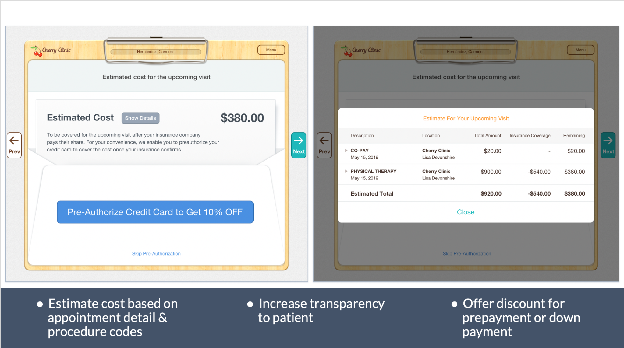
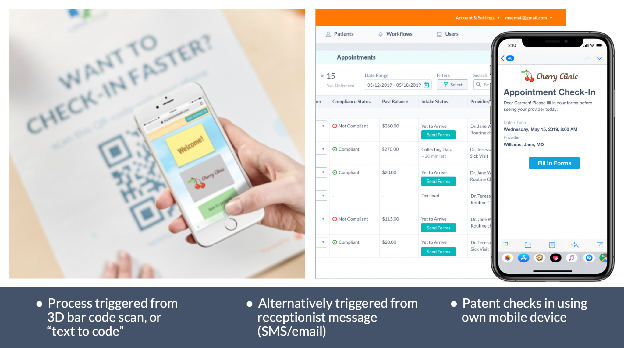
At Tonic, a health tech company, we once went into an annual planning cycle with eight large product areas on the table and the capacity to fully develop two or three. These were solid ideas that had been percolating for a while, and we needed customers to weigh in on which ones deserved the investment. Each session opened with a short walkthrough of our patient intake hero flow so participants knew where every concept would fit. For each concept we showed only the key moment, wrapped in a brief description of the value proposition.
The ranking came back in distinct tiers: two concepts clearly led, followed by a noticeable gap, a middle group, and a set that drew very little interest. That gave us the confidence to reshape the roadmap. The top concept, payments, arrived with a rich layer of context. Participants told stories about co-payments, past-due balances, and financial aid, and those stories shaped which features we prioritized. We also learned how emotionally charged collections are for patients. Hospital systems have to recover outstanding balances to stay viable, and they know that not every patient can pay in full or on time. Even the order in which payment options appear on screen turned out to affect both collection rates and patient distress.
A click-through rate on a payments landing page would have ranked the concept and stopped there.
Viability, feasibility, and distance
Business validation runs alongside the customer work with a small group: one or two senior voices from each of sales, marketing, and customer success who are comfortable in the gray space of conceptual planning. The goal is organizational commitment, with everyone aligned that if you build what you're proposing, the company will see measurable value. Engineering joins at this stage for a preliminary read on feasibility. It's far too early for sizing; you want the team aware of what's coming and flagging any hurdles big enough to change the direction.
Evaluative research is also one of the few areas where remote sessions can beat being in the room. A person evaluating software usually does it alone at a laptop or on a phone, so a remote session puts them in a more natural setting than a conference room. Record the sessions, store them where the whole team can annotate them, and invite your go-to-market partners to watch parties.
Forty concepts is too many
One request I hear often goes something like, "We just finished an ideation workshop and have forty concepts we want customer feedback on." AI has made this far more common, since any language model will hand you forty concepts in under five minutes.
I'd split the work into two phases. First, cluster the ideas into five to seven opportunity areas, each organized around a significant customer pain point, and gather enough feedback to rank those areas with confidence. Then cut everything except the top area, or two at most, and go back to customers for a thorough round of value validation on what's left. Making those cuts is the hardest part of the exercise, and it's where product people earn their paycheck.
If AI saved your team three weeks this quarter, a handful of ninety-minute conversations would cost you a few days of it. At the end of each one, ask about co-development, and count how many people say yes.
---
This article is adapted from Chapter 13 of Product at a Distance: Product Innovation in the Era of Distributed Teams, Ripples Media, 2026.